 FEDELCO, S.L.
FEDELCO, S.L.
C/ Lago Constanza, 46
28017 Madrid
Tel: 91 408 16 25
Fax: 91 408 16 90
10:00 - 13:30 horas
14:30 - 17:30 horas
de lunes a viernes.
EQUIPOS DE PREPARACIÓN DE MUESTRAS
Critical Point Dryers
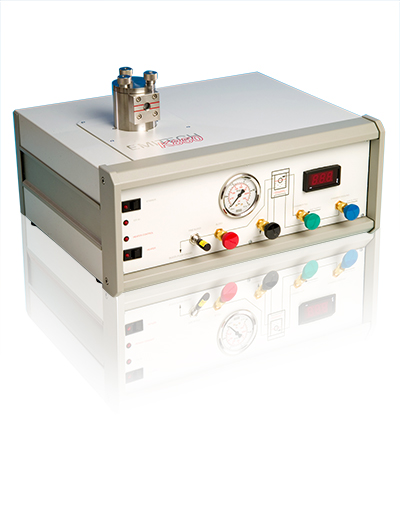 Critical point drying is an established method of dehydrating biological tissue prior to examination in the scanning electron microscope. The technique was first introduced commercially for scanning electron microscopy (SEM) specimen preparation by Polaron in 1970. The original design concepts, which included a horizontal chamber, are still embodied in the design of the E3000 and E3100 systems.
A more recent addition to our product range is the K850 Critical Point Dryer with vertical chamber, which includes built-in heating and cooling. The larger K850WM model is designed to dry a 6” wafer.
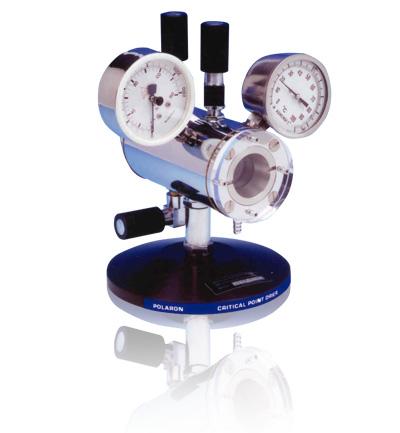  E3000 and E3100 Critical Point Dryers |
 K850 Critical Point Dryer |
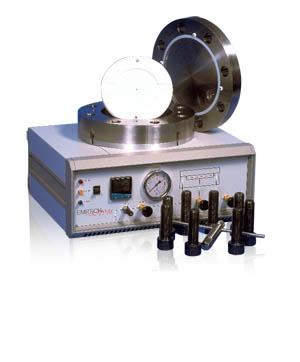 K850WM Large Chamber Critical Point Dryer |
Para información adicional de nuestros equipos, accesorios o productos llámenos al 91 408 16 25
o enviarnos un e-mail a :